Our
Maths
curriculum
Our mastery approach helps children understand maths deeply, building confidence, fluency and the skills to tackle new challenges with assurance.

Curriculum intent
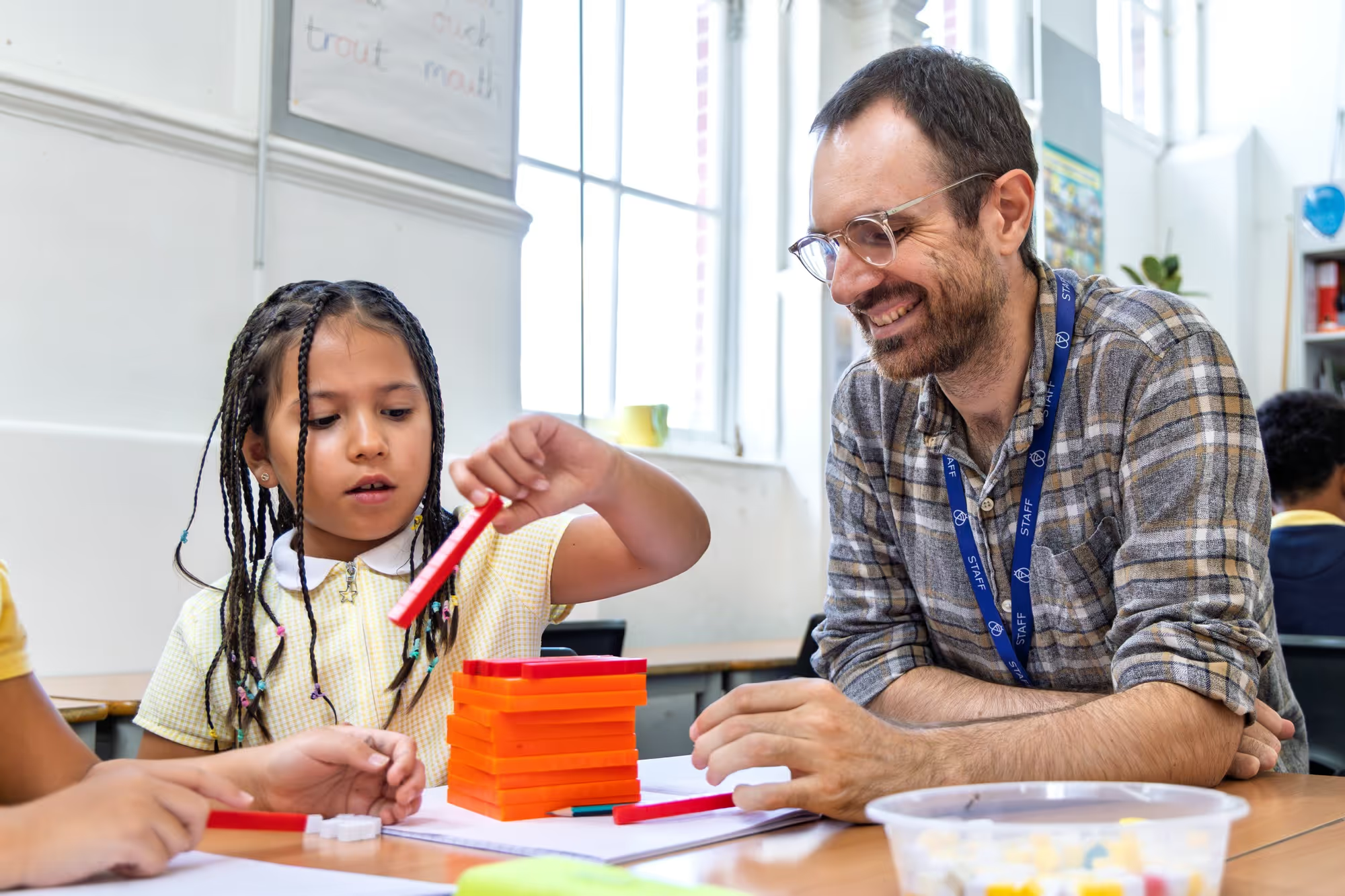
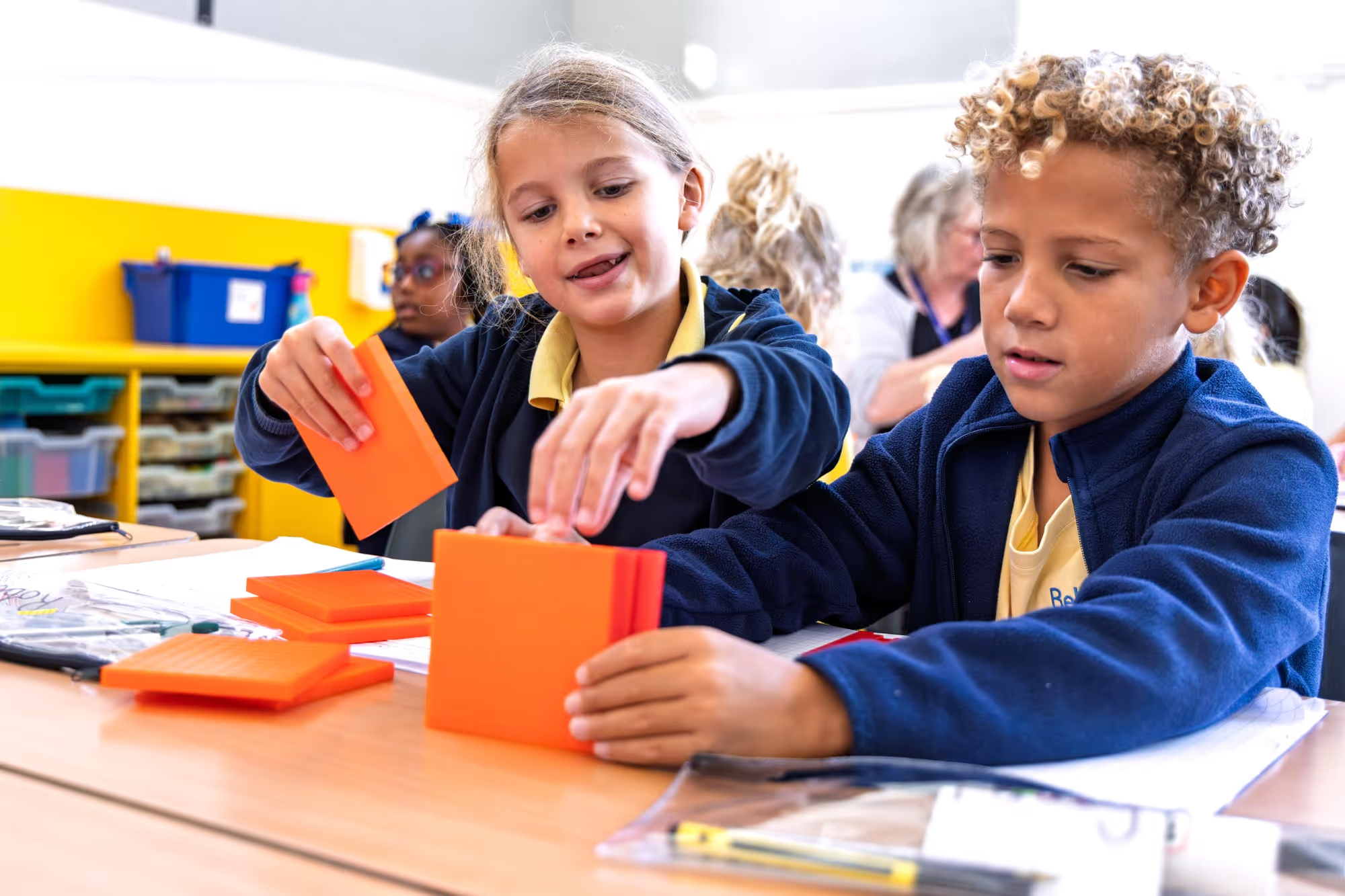
At The Belham, we want every child to feel confident and capable in maths. Our aim is for pupils to develop fluency, reasoning and problem-solving so they understand why mathematical methods work, not just how to apply them. Through structured teaching, discussion and practical exploration, children build confidence, resilience and a positive attitude towards maths.
How we teach
Our maths teaching is informed by current educational research into how children learn mathematics best. We use a Maths Mastery approach, introduced from Reception and carefully sequenced to ensure learning builds securely over time. Lessons follow a clear and consistent structure:
• Anchor Task – introducing new ideas through discussion or practical exploration
• New Learning – teaching key concepts and strategies step by step
• Guided Practice – applying learning together and addressing misconceptions
• Independent Practice – applying skills independently with increasing challenge
Children learn through a concrete–pictorial–abstract approach, which research shows helps pupils develop secure conceptual understanding. They begin with hands-on resources, move to visual representations, and then work with numbers and symbols.
We place strong emphasis on mental strategies, reasoning and problem-solving. Approaches such as bar modelling support pupils to visualise relationships and explain their thinking clearly. Teachers check understanding carefully and ensure pupils are secure before moving on.
Children also use Times Tables Rock Stars, NumBots and MyMaths to support fluency and confidence both in school and at home.
For more information, visit the Maths — No Problem! website.
Impact
Pupils leave The Belham as confident, fluent mathematicians who can reason clearly, explain their thinking and apply their knowledge to unfamiliar problems. They develop strong foundations that prepare them well for secondary school and future learning.

How you can help at home
Parents can support learning by creating a positive atmosphere for maths, engaging in collaborative activities and exploring real-world applications (like shopping, cooking or measuring).
Children also have access to:
• NumBots (for Key Stage 1) – to strengthen number bonds and fluency in addition and subtraction.
• Times Tables Rock Stars (for Key Stage 2) – to build accuracy and speed with multiplication and division facts.
Short, regular sessions of around 5–10 minutes a few times a week are most effective. Encouragement and praise go a long way in helping your child feel confident about maths.
Fluency Facts by Term
Quick and accurate recall of key mathematical facts is essential for confidence and resilience in maths. When these facts become automatic, children can focus more on solving complex problems.
We’ve outlined six essential fluency skills for each year group to practise and master. Your support at home is invaluable in helping children strengthen these skills—regular practice boosts fluency, confidence and enjoyment.
What is NumBots?
Children at The Belham have access to NumBots, an online platform that builds confidence and fluency through fun, interactive games. It supports skills like counting, addition and subtraction.
• Reception: Focuses on number recognition and early addition and subtraction.
• Year 1: Develops number bonds and fluency with numbers up to 20.
• Year 2: Strengthens addition and subtraction fluency in preparation for more advanced maths.
Using NumBots at home isn’t mandatory, but short, regular practice (5–10 minutes a few times a week) is encouraged to support progress.
What is Times Tables Rock Stars (TTRS)?
Children also use Times Tables Rock Stars (TTRS) to master multiplication and division through engaging, competitive games.
• Year 2: Children can use both NumBots and TTRS—NumBots for addition and subtraction, and TTRS to begin exploring times tables.
• Years 3–6: TTRS builds speed and confidence across all times tables, preparing children for more complex mathematical concepts.
Short, consistent practice sessions (5–10 minutes) are recommended to reinforce learning.
What is ATOM Learning?
ATOM Learning supports children in developing English and maths skills through engaging, interactive tasks tailored to their year group and ability.
• Years 5 & 6: Weekly English and maths tasks are set as mandatory homework to help prepare for assessments and secondary school.
• Years 3 & 4: Tasks are available as an optional challenge for independent practice.
For extra information, watch our guidance videos below:
Right to withdraw from sex education
Parents have the right to request that their child be withdrawn from some or all of the sex education elements of Relationships and Sex Education (RSE).
At The Belham Primary School, sex education is delivered as part of our RSE programme in line with statutory guidance. Parents do not have the right to withdraw their child from Relationships Education or from the statutory science curriculum, including content on puberty and reproduction.
Any request to withdraw a child from sex education should be made in writing to the Headteacher. The school will work in partnership with parents to discuss the request and ensure that pupils continue to receive appropriate, age-appropriate education.